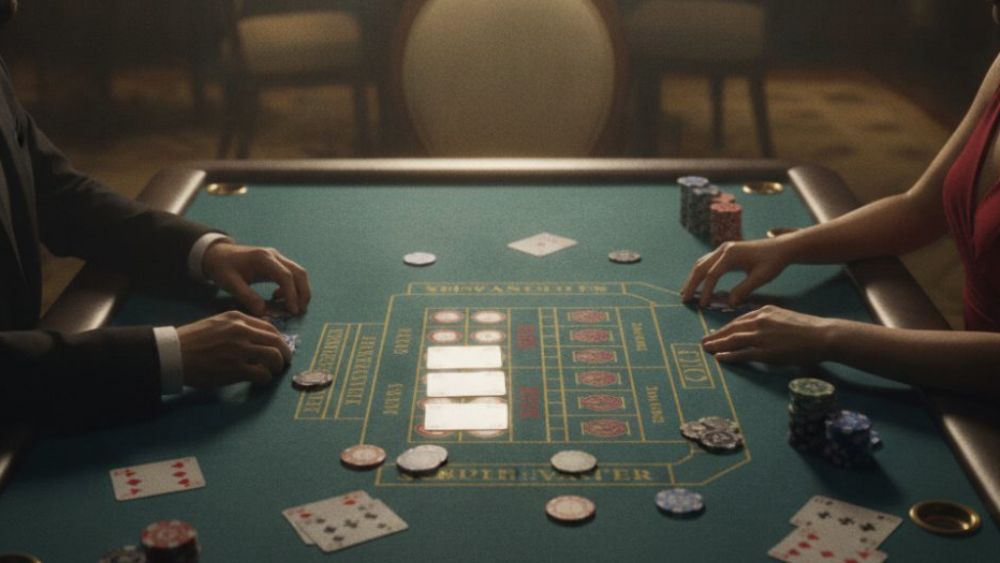
Why Craps Feels Like a Foreign Language on the Manila Floor
Walk past the craps pit at Solaire, City of Dreams, Okada or Newport World Resorts on a busy Saturday and you will hear it before you see it: a wall of shouting, chips clapping against the felt, and a stickman narrating a game that sounds like it belongs to another country. Most Filipino players who grew up on tong-its, pusoy, baccarat and the occasional slot session look at that table and quietly keep walking.
That instinct is understandable, but it is also expensive in a different way. Craps carries some of the lowest house edges in the entire casino, and a handful of bets sit at or below 1.5 percent. Compare that to the 2.5 to 5 percent you routinely give up on carnival games and side bets, and the gap adds up fast over a long session.
The problem is not the math. The problem is that beginners learn craps in the worst possible order — they learn the shouting first, the bets second, and the rules last. This guide flips that. Below are the seven mistakes that separate a first-timer from someone who can actually sit at a P500 minimum table and hold their own.
Mistake 1: Buying In Before You Know the Table Minimum
The single most common rookie error happens before a single die is thrown. You see an open seat, you sit down, you drop your cash, and only then do you notice the placard: P1,000 minimum, P5,000 maximum, five times odds.
In Metro Manila, craps tables typically post minimums anywhere from P300 to P2,000 depending on the property, the day and the time. Weekday afternoons at Newport World Resorts and Solaire can be friendlier; Friday and Saturday nights at City of Dreams and Okada climb quickly.
What the placard actually tells you
- Table minimum: the smallest amount you can put on the pass line or don't pass line per bet. Every other bet usually has its own minimum.
- Table maximum: the ceiling for a single bet, not for your whole session.
- Odds multiple: how much you can back your pass line bet once a point is established. Three-four-five times odds is standard in Philippine IRs; some tables go ten times.
If your bankroll for the night is P10,000 and the minimum is P1,000, you are not underbanked — you are underbanked for the odds bet, which is the only part of craps where the casino has zero edge. Walking away from a table that is too rich for you is not cowardice. It is the first correct decision of the night.
Mistake 2: Treating Every Bet on the Layout as Equal
The craps layout is a minefield of seductive bets. The hardways pay 9-to-1 and 7-to-1. The yo (eleven) pays 15-to-1. The any seven pays 4-to-1. These numbers look generous, and that is exactly the trap.
Here is the honest comparison that most beginner guides skip:
- Pass line / don't pass: 1.41 percent house edge
- Pass line with full odds: drops below 1 percent depending on the odds multiple
- Come / don't come: same 1.41 percent
- Place 6 and 8: 1.52 percent
- Hardways: 9.09 percent on 6 and 8, 11.11 percent on 4 and 10
- Any seven: 16.67 percent
- Proposition bets in the centre: often 11 to 16 percent
When a dealer leans in and suggests a hardway because "it's due," understand what you are being offered. At 9 percent, the hardway is seven times more expensive than the pass line. It is fine as an occasional P100 lottery ticket for fun, but it should never be your main bet — and it should never be placed with money you needed for the odds bet.
If you only remember one sentence from this article, make it this: the pass line, the don't pass line, and the odds behind them are the only bets where the table is genuinely close to fair.
Mistake 3: Skipping the Odds Bet Because It Looks Complicated
This is the mistake that quietly costs disciplined players the most money over a year. The odds bet — the extra wager you place behind your pass line bet after a point is established — pays true odds with no house edge. It is the closest thing to a free bet in a Philippine casino.
Beginners skip it for three reasons: they do not understand when to place it, they are afraid of the dealer's reaction, and they think it ties up too much cash.
How it works in practice
- You bet P500 on the pass line. The shooter rolls a 6. The point is now 6.
- The dealer will usually ask, "Odds?" You say yes and place additional chips behind your pass line bet.
- On a 3-4-5 table, you can back up to five times your flat bet on a point of 6 or 8, four times on 5 or 9, and three times on 4 or 10.
- If the shooter repeats the 6 before rolling a 7, your pass line bet pays even money and your odds bet pays 6-to-5.
Placing the odds does not change your probability of winning. It changes how much you win when you do. On a P500 pass line bet with P2,500 odds on a point of 6, you collect P500 on the flat bet and P3,000 on the odds. That is the difference between a hobby and a plan.
If you are unsure, just ask the dealer. In Philippine IRs, dealers are used to new players and will usually walk you through the placement without judgement, especially on quieter weekday shifts.
Mistake 4: Misreading the Dice and Tempting a Seven-Out
Small etiquette and handling errors do more damage to a beginner's session than bad luck. The dealers and the box person are watching everything, and the fastest way to get a cold reception at the table is to mishandle the dice.
- Only touch the dice with one hand. Two hands signals to the crew that you might be switching dice.
- Keep the dice over the table. If they leave the felt, the box person will inspect them and the mood changes instantly.
- Do not throw them hard enough to hit the far wall above the bank. Both dice must hit the back wall for the roll to count. Soft-rolling or blanking the wall is called a no-roll and repeated attempts get you warned.
- Do not set the dice for thirty seconds. A quick shake and a toss is fine. Long ritualised dice-setting slows the game and irritates regulars.
You will also hear the phrase "seven out" constantly. That is simply the shooter rolling a 7 before repeating the point, which ends the roll and passes the dice. It is not a personal failure, and it is not bad luck you can negotiate with. The probability of a seven is 16.67 percent on every single roll, no matter how many points the shooter has made.
Mistake 5: Chasing the Hot Table and Abandoning Your Plan
Craps is a social game, and that is both its charm and its main financial hazard. A loud, winning table pulls in players the way a hot baccarat shoe pulls in spectators at Solaire. The danger is that you sit down mid-roll, miss the context, and start betting bigger than you planned because everyone around you is pressing.
Set two numbers before you walk to the pit: a session loss limit and a session win goal. A common structure for a P20,000 bankroll is a P6,000 loss limit and a P6,000 win goal, with the rest reserved for a second session or another night.
Three rules that keep beginners solvent
- Never increase your flat bet after a loss. Press after a win, not after a loss.
- Cap your odds bet at a fixed multiple of your flat bet — say, double odds only — so your variance does not silently double.
- When you hit your win goal, colour up. The table will still be there tomorrow.
There is no such thing as a hot table in the mathematical sense. Each roll is independent. The only thing that changes from table to table is the energy, and energy does not pay the odds.
Mistake 6: Ignoring Comps, Ratings and the Cost of Getting There
Craps players in the Philippines often leave value on the table because they never ask about the players' club. If you are betting P500 on the pass line with full odds and running a two-hour session at Okada or City of Dreams, you are generating real theo — theoretical loss — for the casino, and that is what comps are based on.
Sign up for the property's loyalty programme before you buy in. Present your card when you take a seat so the pit boss can rate your play. Ratings on craps are typically based on your average flat bet, not your odds, so front-loading your odds instead of raising your flat bet is a smart way to protect your rating while keeping the house edge low.
Also budget for the trip itself. Parking at the IRs, Grab fares from Makati or Quezon City on a Friday night, and a late dinner at the food court all eat into the same bankroll. A P5,000 session can quietly become an P8,000 night before you have placed your first bet.
Mistake 7: Believing the Dice Can Be Controlled
You will hear this one at every craps table in Metro Manila eventually: someone claims to have a "rhythm" or a "signature throw" that beats the game. Dice influencing is a popular internet topic, and it has produced a lot of expensive seminars and not much verified profit.
Modern casino dice are manufactured to tight tolerances, and Philippine IR tables use the same precision dice as Las Vegas and Macau. Bouncing two cubes off a felt wall and a rubberised backstop introduces far more randomness than any hand technique can remove. The back wall is there precisely to defeat controlled throws.
What actually improves your results is boring and repeatable: low-edge bets, full odds, a fixed session limit, and the discipline to walk away. If someone at the table is selling you a system, they are selling you entertainment, not an edge.
A Simple First-Session Plan for a Manila Craps Table
If you are walking into a Philippine casino for your first craps session in 2026, keep it this simple.
- Pick a table with a minimum you can comfortably cover twenty times over.
- Bet the pass line only. Add the odds whenever a point is established.
- Skip the centre of the layout entirely for the first hour.
- If you want a taste of the hardways, set aside a separate P500 and treat it as gone.
- Colour up when you hit your win goal or your loss limit, whichever comes first.
Craps rewards patience more than any other table game on the floor. Learn the pass line, learn the odds, learn when to stop. The shouting will take care of itself.
Frequently Asked Questions
What is the minimum bet for craps in Philippine casinos?
Most craps tables in Metro Manila integrated resorts post minimums between P300 and P2,000 depending on the property and the time of day. Weekday afternoons are generally cheaper than Friday or Saturday nights. Check the placard before you sit down, and remember that the odds bet behind your pass line is a separate wager.
Which craps bets have the lowest house edge?
The pass line and don't pass line both carry a 1.41 percent house edge. Adding the odds bet behind them lowers your overall edge to below 1 percent depending on the odds multiple allowed. Place bets on 6 and 8 sit at 1.52 percent, while hardways range from 9 to 11 percent and the any seven bet is 16.67 percent.
Can I play craps in the Philippines if I have never played before?
Yes. Dealers at Solaire, City of Dreams, Okada and Newport World Resorts regularly assist first-time players, especially on quieter shifts. Start with the pass line only, ask the dealer when to place your odds, and avoid the proposition bets in the centre of the layout until you are comfortable with the flow of the game.
Does craps count toward casino comps in Manila?
Craps play is rated by the pit, usually based on your average flat bet rather than your odds bet. Sign up for the property's players' club before you buy in and present your card when you take a seat. Because odds bets are not rated, keeping your flat bet modest and your odds high is a reasonable way to protect your rating.